One Year Later: Your Travel Photos Mean More Than You Think
The day you take a travel photo, you don't think much of it. It's just a picture of a café in Lisbon, a blurry shot of a sunset in Kyoto, or a selfie with someone you met on a train in Bangkok. You snap it, glance at the screen, and move on. It weighs nothing. It costs nothing. It's just another file in a sea of thousands.
Then a year passes. Maybe two. You're scrolling through your phone on a quiet Sunday afternoon, and you land on that café photo. Suddenly you're not looking at a JPEG — you're smelling espresso and hearing Portuguese drifting through an open window. The blurry sunset isn't blurry anymore; it's the exact shade of orange you remember painting the sky over Kiyomizu-dera. The stranger from the train? You can still hear their laugh.
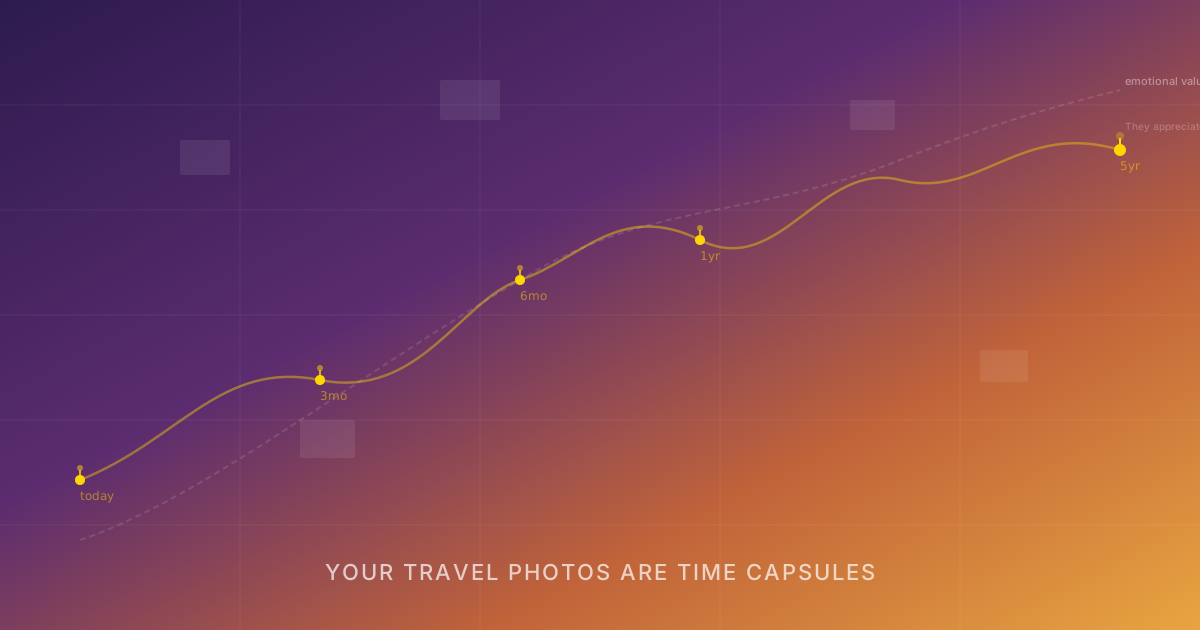
Travel photos are one of the only things in life that appreciate in value the older they get. A stock certificate can crash. A gadget becomes obsolete. But a travel photo? Give it time, and it transforms from a casual snapshot into an irreplaceable artifact of a person you used to be.
The Emotional Compounding of Travel Memories
Psychologists call this "rosy retrospection" — our tendency to remember the past more fondly than we experienced it. But travel photos do something more than just trigger nostalgia. They serve as anchors. Each photo tethers you to a specific place, a specific moment, a specific version of yourself that existed only in that corner of the world.
Here's what happens over time:
- Month 1: You're back home. The photos are still fresh. You might post a few, but most sit in your camera roll untouched. They feel almost too recent to be meaningful.
- Month 6: Work has resumed. The trip feels distant. You scroll past the photos occasionally but they're mixed in with screenshots, memes, and grocery lists. They're losing context.
- Year 1: Something reminds you of the trip — a song, a smell, a random conversation. You dig for the photos. If you find them, the rush of memory is startling. The photo that felt ordinary a year ago now feels precious.
- Year 5: By now, if those photos aren't organized, they might as well not exist. They're buried under 20,000 newer images. The memories they hold are fading. But the ones you can still find? They're gold.
The cruel irony: the moment travel photos become most valuable is the same moment they become hardest to find.
Why Your Camera Roll Betrays Your Memories
Most of us treat our camera roll like a storage unit — we throw everything in and assume we'll sort it later. But "later" never comes. The average iPhone user has over 5,000 photos. Heavy travelers? 20,000 or more. Buried in that pile are your trips to Bali, Barcelona, and Banff, all indistinguishable from screenshots of boarding passes and blurry photos of restaurant menus.
The camera roll has no sense of place. It's a timeline, not a map. It organizes by date, not by journey. It treats your photo of the Northern Lights the same way it treats a screenshot of a WiFi password. This is why, a year later, you can't find the one photo you actually want to see.
Travel memories deserve better than a chronological dump. They deserve to be organized the way your brain actually remembers them: by where they happened, not just when.
The Map Is the Memory
Think about how you tell a travel story to a friend. You don't say, "On July 14th at 3:47 PM, I took this photo." You say, "This was in that little alley behind the Duomo in Florence." The place is the memory. The GPS coordinates already embedded in every photo you take are the natural organizing principle your brain has been waiting for.
This is why Wimemo's Atlas exists. Instead of scrolling endlessly through a timeline, you see your travels on a world map. Each pin is a moment. Zoom into Tokyo and see every ramen shop, every temple, every quiet street corner you captured. Zoom into Patagonia and trace the hiking trail you took, photo by photo. The map becomes your memory.
When you revisit a trip a year later, you don't want to scroll through 47 days of thumbnails. You want to see the journey. The map gives you that — the full arc of your adventure, laid out geographically, exactly as it happened.
The Photos You Almost Didn't Take
Here's something I've noticed: the photos that end up meaning the most are rarely the ones you staged. It's not the perfect shot of the Eiffel Tower. It's the blurry photo of your travel partner laughing at a terrible meal in a restaurant you can't name. It's the accidental shot of your feet on cobblestones. It's the overexposed window view from a hostel room you'll never stay in again.
These are the photos that, a year later, hit you the hardest. Not because they're beautiful, but because they're true. They capture something no postcard ever could: the texture of a specific moment in a specific place with specific people — a combination that will never exist again.
And these are exactly the photos most likely to be deleted when you're trying to "clean up" your camera roll. Because in the moment, they don't look important. They just look like bad photography. But give them time.
What Happens When You Can't Find Them
I've spoken to travelers who lost years of photos to a broken phone, a corrupted backup, or simply the entropy of an unmanaged photo library. The look on their face when they describe what's gone isn't about the photos themselves — it's about the memories those photos were holding together. Without the visual anchor, the details start to slip. Was that café in the 3rd arrondissement or the 11th? Did we visit that temple before or after the market? Was the water really that blue?
Photos don't just capture memories. They preserve them. They freeze the details that your brain, left to its own devices, would gradually soften and blur. A well-organized travel photo library isn't a luxury — it's insurance against the slow erosion of your own history.
Making Your Travel Photos Last
So how do you make sure your travel photos are still there — and still findable — a year from now? Five years from now?
1. Organize by place, not date. Your brain remembers geography. Use a tool that maps your photos to where they were taken. Wimemo's Atlas does this automatically — every photo lands on the map based on its GPS data, no manual sorting required.
2. Keep them local. Cloud services come and go. Terms change. Accounts get locked. Your travel memories are too important to trust entirely to a server you don't control. Wimemo processes everything on your device. Your photos stay with you.
3. Don't delete the "bad" ones. That blurry shot, that overexposed selfie, that photo of a random street corner — these are often the ones that hit hardest a year later. They're not bad photos; they're honest photos. They're windows into real moments, not curated highlights.
4. Revisit intentionally. Don't wait to stumble across your old travel photos by accident. Make it a habit — once a month, open your travel map and drop into a random pin. See what memories surface. You might be surprised by what you've already started to forget.
The Gift Your Future Self Deserves
Right now, somewhere in your camera roll, there's a photo that doesn't look like much. It might be from a trip six months ago, or two years ago. You probably scrolled past it this morning without noticing. But a year from now — maybe on a hard day, maybe on a quiet evening — you'll find it again. And it will mean something you can't possibly predict today.
The only question is: will you be able to find it when that day comes?
Your travel photos are time capsules addressed to your future self. The least you can do is make sure they actually arrive.
Start mapping your travel memories with Wimemo — free on the App Store.
一年后:你的旅行照片比你想象的更有意义
拍下旅行照片的那一刻,你不会多想。不过是里斯本的一家咖啡馆、京都模糊的日落、曼谷火车上偶遇的陌生人的自拍。拍完,看一眼屏幕,继续往前走。它没有重量,没有成本,只是成千上万张照片中的又一个文件。
然后一年过去了。也许是两年。一个安静的周日下午,你翻着手机,停在那张咖啡馆的照片上。突然间,你看到的不是一张JPEG——你闻到了浓缩咖啡的味道,听到了葡萄牙语从敞开的窗户飘进来。那模糊的日落不再模糊,它就是清水寺上空那片你还记得的橙色天空。火车上的陌生人?你还能听到他的笑声。
旅行照片是生活中少数会随时间增值的东西之一。股票可能崩盘,电子产品会过时,但旅行照片?给它时间,它从随手拍变成不可替代的记忆——关于曾经的你。
旅行记忆的情感复利
心理学家称之为"玫瑰色回忆"——我们对过去的记忆往往比实际经历更美好。但旅行照片做的不仅仅是触发怀旧。它们是锚点。每一张照片把你拴在某个特定的地方、特定的时刻、特定的自己——一个只存在于世界那个角落的你。
- 第1个月:你回到家,照片还很新鲜。你可能会发几张,但大多数原封不动地躺在相册里。
- 第6个月:工作恢复了节奏,旅程感觉遥远。照片和截图、表情包混在一起,正在失去上下文。
- 第1年:某件事让你想起那次旅行——一首歌、一种气味、一段随意的对话。你翻找照片。如果能找到,记忆的冲击令人吃惊。一年前觉得普通的照片,现在变得珍贵。
- 第5年:如果那些照片没有被整理,它们几乎等于不存在。它们被埋在20000张更新的图片下。它们承载的记忆正在褪色。但那些你还能找到的?是金子。
残酷的讽刺:旅行照片变得最有价值的时刻,正是它们最难被找到的时刻。
为什么你的相册背叛了你的记忆
大多数人的相册就像一个仓库——把所有东西扔进去,想着以后再整理。但"以后"永远不会来。重度旅行者的手机里有超过20000张照片。埋藏在其中的是巴厘岛、巴塞罗那、班夫的旅行,与登机牌截图和餐厅菜单的模糊照片毫无区别。
相册没有地点感。它是时间线,不是地图。它按日期排列,不按旅程排列。它对待极光照片和WiFi密码截图一视同仁。这就是为什么一年后你找不到真正想看的那一张。
地图就是记忆
想想你是如何向朋友讲述旅行故事的。你不会说"7月14日下午3点47分我拍了这张照片"。你会说"这是在佛罗伦萨大教堂后面的那条小巷里"。地点本身就是记忆。每张照片中嵌入的GPS坐标,正是你的大脑一直在等待的自然组织原则。
这就是Wimemo Atlas存在的意义。你不需要在时间线中无休止地滚动,而是在世界地图上看到你的旅行。每个大头针就是一个瞬间。放大东京,看到每一家拉面馆、每一座寺庙、每一个你捕捉到的安静街角。放大巴塔哥尼亚,按照片追溯你走过的徒步路线。地图成为了你的记忆。
你差点没拍的那些照片
我发现了一件事:最有意义的照片往往不是你精心摆拍的那些。不是埃菲尔铁塔的完美照片。而是你的旅伴在一家不知名餐厅因难吃的饭菜大笑的模糊照片。是你不小心拍到的鹅卵石路面上的双脚。是你永远不会再住的青旅窗外的过曝景色。
这些照片之所以一年后最触动你,不是因为它们美,而是因为它们真。它们捕捉到的东西是明信片永远做不到的:某个特定地方、特定时刻、特定人群的质感——一个永远不会再现的组合。
让旅行照片持久保存
1. 按地点整理,而非日期。你的大脑记住的是地理。使用能将照片映射到拍摄地的工具。Wimemo的Atlas自动完成这项工作。
2. 本地保存。云服务来了又走,条款会变,账号可能被锁。旅行记忆太重要了,不能完全信任你无法控制的服务器。Wimemo在你的设备上本地处理一切。
3. 不要删除"不好看"的照片。模糊的、过曝的、随手拍的——这些往往是一年后最打动你的。
4. 有意识地回顾。养成习惯:每月一次打开旅行地图,随机点开一个大头针。看看什么记忆会浮现。
送给未来自己的一份礼物
现在,在你的相册里的某个角落,有一张看起来不起眼的照片。六个月前或两年前的旅行拍的。你今天早上可能刷过去了,没有注意。但一年后——也许在一个艰难的日子,也许在一个安静的夜晚——你会再次找到它。它会意味着你今天无法预知的东西。
唯一的问题是:那一天到来时,你还能找到它吗?
用Wimemo在地图上记录你的旅行记忆——App Store免费下载。
1年後:旅の写真は思っている以上に意味がある
旅先で写真を撮る瞬間、深く考えたりはしない。リスボンのカフェの一枚、京都で撮ったぼやけた夕日、バンコクの列車で出会った誰かとの自撮り。撮って、画面をちらっと見て、先へ進む。それは重さもコストもなく、何千枚もある中のたった一つのファイルに過ぎない。
それから1年が経つ。あるいは2年。静かな日曜日の午後、スマホをスクロールしていて、ふとそのカフェの写真にたどり着く。突然、あなたが見ているのはJPEGではない——エスプレッソの香りがし、開いた窓からポルトガル語が聞こえてくる。ぼやけた夕日はもはやぼやけておらず、清水寺の空を染めたあのオレンジ色そのものだ。列車の見知らぬ人は?その笑い声がまだ聞こえる。
旅の写真は、時間が経つほど価値が上がる、人生で数少ないものの一つだ。株は暴落し、ガジェットは時代遅れになる。しかし旅の写真は?時間を与えれば、何気ないスナップショットから、かつての自分のかけがえのない遺物へと変わる。
旅の記憶が感情的に複利で増える理由
心理学者はこれを「バラ色の回想」と呼ぶ——過去を実際よりも美しく思い出す傾向のことだ。しかし旅の写真は単なるノスタルジア以上のことをする。錨(アンカー)として機能するのだ。それぞれの写真は、特定の場所、特定の瞬間、世界のその一角にしか存在しなかった特定の自分自身に、あなたを結びつける。
- 1ヶ月後:帰宅したばかり。写真はまだ新鮮。数枚投稿するかもしれないが、ほとんどはそのまま。
- 6ヶ月後:仕事が再開し、旅は遠く感じられる。写真はスクリーンショットやミームに混ざり、文脈を失いつつある。
- 1年後:何かが旅を思い出させる——曲、匂い、何気ない会話。写真を探す。見つかれば、記憶の奔流に驚かされる。1年前には普通だった写真が、今は貴重に感じられる。
- 5年後:整理されていなければ、それらの写真は存在しないに等しい。2万枚の新しい画像の下に埋もれている。しかし見つけられるものは?金だ。
旅の写真が最も価値を持つ瞬間は、最も見つけにくくなる瞬間でもあるという残酷な皮肉。
地図こそが記憶だ
旅の話を友人にするときのことを考えてみてほしい。「7月14日午後3時47分にこの写真を撮った」とは言わない。「これはフィレンツェのドゥオーモ裏のあの小さな路地で撮ったんだ」と言う。場所こそが記憶なのだ。すべての写真に埋め込まれたGPS座標は、あなたの脳がずっと待っていた自然な整理原理だ。
これがWimemoのAtlasが存在する理由だ。タイムラインを延々とスクロールする代わりに、世界地図の上に旅が表示される。各ピンが一つの瞬間。東京にズームインすれば、撮影したすべてのラーメン店、寺院、静かな街角が見える。パタゴニアにズームインすれば、歩いたハイキングコースを写真ごとに辿れる。地図が記憶になるのだ。
撮らなかったかもしれない写真たち
気づいたことがある。最も意味を持つ写真は、たいてい演出されたものではない。エッフェル塔の完璧なショットではない。名も知らぬレストランで不味い料理に大笑いする旅仲間のぼやけた写真だ。石畳の上の自分の足を偶然撮った一枚。二度と泊まらない hostel の窓からの露出オーバーの景色。
これらの写真が1年後に最も胸を打つのは、美しいからではなく、真実だからだ。絵葉書には決して捉えられないものを捉えている——特定の場所、特定の瞬間、特定の人々の質感。二度と存在しない組み合わせだ。
旅の写真を長持ちさせる方法
1. 日付ではなく場所で整理する。脳は地理を覚えている。WimemoのAtlasはGPSデータに基づいて自動的に写真を地図に配置する。
2. ローカルに保存する。クラウドサービスは移り変わる。旅の記憶は自分でコントロールできないサーバーに完全に委ねるには大切すぎる。Wimemoはすべてをデバイス上で処理する。
3. 「下手な」写真を消さない。ぼやけたショット、露出オーバーの自撮り、適当な街角の写真——これらが1年後に最も響くことが多い。
4. 意識的に振り返る。月に一度、旅の地図を開き、ランダムなピンに飛び込む習慣をつけよう。
未来の自分への贈り物
今、あなたのカメラロールのどこかに、大したことのない写真がある。半年前か2年前の旅のものだ。今朝スクロールして気づかずに通り過ぎたかもしれない。しかし1年後——つらい日に、あるいは静かな夜に——あなたは再びそれを見つける。そしてそれは、今日のあなたには予測できない何かを意味するだろう。
唯一の問いは:その日が来たとき、あなたはそれを見つけられるか?
Wimemoで旅の記憶を地図に刻もう——App Storeで無料ダウンロード。
1년 후: 여행 사진은 생각보다 더 큰 의미를 가집니다
여행 사진을 찍는 그 순간, 당신은 별생각 없이 셔터를 누릅니다. 리스본의 한 카페, 교토의 흐릿한 석양, 방콕 기차에서 만난 누군가와의 셀카. 찍고, 화면을 한 번 보고, 다시 길을 갑니다. 무게도 없고, 비용도 들지 않습니다. 그저 수천 장 중 하나의 파일일 뿐입니다.
그리고 1년이 지납니다. 어쩌면 2년. 조용한 일요일 오후, 핸드폰을 스크롤하다 그 카페 사진에 멈춥니다. 갑자기 당신이 보고 있는 것은 JPEG가 아닙니다. 에스프레소 향이 나고, 열린 창문 너머로 포르투갈어가 들려옵니다. 흐릿한 석양은 더 이상 흐릿하지 않습니다. 기요미즈데라 하늘을 물들였던 바로 그 오렌지색입니다. 기차에서 만난 낯선 사람? 아직도 그 웃음소리가 들립니다.
여행 사진은 시간이 지날수록 가치가 오르는 인생의 몇 안 되는 것 중 하나입니다. 주식은 폭락할 수 있고, 기기는 구식이 됩니다. 하지만 여행 사진은요? 시간을 주면, 평범한 스냅샷에서 대체할 수 없는 유물로 변합니다. 한때의 당신 자신에 대한.
여행 기억의 감정적 복리
심리학자들은 이를 "장밋빛 회상"이라고 부릅니다. 과거를 실제보다 더 아름답게 기억하는 경향이죠. 하지만 여행 사진은 단순한 향수 이상의 일을 합니다. 그것은 닻 역할을 합니다. 각 사진은 특정 장소, 특정 순간, 세상의 그 구석에만 존재했던 특정한 자신에게 당신을 묶어둡니다.
- 1개월 후: 집에 돌아왔습니다. 사진은 여전히 생생합니다. 몇 장 올릴 수도 있지만, 대부분은 그대로 남아 있습니다.
- 6개월 후: 일상이 재개되었습니다. 여행은 멀게 느껴집니다. 사진들은 스크린샷, 밈과 섞여 맥락을 잃어가고 있습니다.
- 1년 후: 무언가가 여행을 떠올리게 합니다. 노래, 냄새, 우연한 대화. 사진을 찾습니다. 찾을 수 있다면, 기억의 파도에 놀랍니다. 1년 전에는 평범했던 사진이 이제는 소중하게 느껴집니다.
- 5년 후: 정리되지 않았다면, 그 사진들은 없는 것과 같습니다. 2만 장의 새로운 이미지 아래 묻혀 있습니다. 하지만 찾을 수 있는 것들은? 금입니다.
잔인한 아이러니: 여행 사진이 가장 소중해지는 순간이 바로 가장 찾기 어려워지는 순간입니다.
지도가 곧 기억입니다
친구에게 여행 이야기를 할 때를 생각해 보세요. "7월 14일 오후 3시 47분에 이 사진을 찍었어"라고 말하지 않습니다. "이거 피렌체 두오모 뒤쪽 골목에서 찍은 거야"라고 말합니다. 장소 자체가 기억입니다. 모든 사진에 이미 포함된 GPS 좌표는 당신의 뇌가 기다려온 자연스러운 정리 원칙입니다.
이것이 Wimemo Atlas가 존재하는 이유입니다. 타임라인을 끝없이 스크롤하는 대신, 세계 지도 위에서 여행을 봅니다. 각 핀이 하나의 순간입니다. 도쿄를 확대하면 찍은 모든 라멘집, 사찰, 조용한 골목길이 보입니다. 파타고니아를 확대하면 걸었던 트레킹 코스를 사진별로 따라갈 수 있습니다. 지도가 기억이 됩니다.
찍지 않았을 수도 있는 사진들
제가 발견한 것이 있습니다. 가장 의미 있는 사진은 보통 연출된 것이 아닙니다. 에펠탑의 완벽한 샷이 아닙니다. 이름 모를 식당에서 형편없는 음식에 웃음 터지는 여행 동료의 흐릿한 사진입니다. 조약돌 위의 내 발을 우연히 찍은 사진. 다시는 묵지 않을 호스텔 창문 너머의 과다노출 풍경입니다.
이 사진들이 1년 후 가장 가슴을 울리는 이유는 아름다워서가 아니라 진실하기 때문입니다. 엽서가 절대 담을 수 없는 것을 담고 있습니다. 특정 장소, 특정 순간, 특정 사람들의 질감. 다시는 존재하지 않을 조합입니다.
여행 사진을 오래도록 보존하는 법
1. 날짜가 아닌 장소로 정리하세요. 뇌는 지리를 기억합니다. Wimemo의 Atlas는 GPS 데이터로 사진을 자동으로 지도에 배치합니다.
2. 로컬에 보관하세요. 클라우드 서비스는 왔다가 사라집니다. 여행 기억은 통제할 수 없는 서버에 전적으로 맡기기엔 너무 소중합니다. Wimemo는 모든 것을 기기에서 처리합니다.
3. "못 찍은" 사진을 삭제하지 마세요. 흐릿한 샷, 과다노출 셀카, 아무 거리 모퉁이 사진 — 이것들이 1년 후 가장 큰 울림을 줄 때가 많습니다.
4. 의식적으로 다시 찾아보세요. 한 달에 한 번, 여행 지도를 열고 무작위 핀을 클릭하는 습관을 들이세요.
미래의 나에게 주는 선물
지금, 당신의 카메라 롤 어딘가에 별것 아닌 사진이 한 장 있습니다. 6개월 전, 혹은 2년 전 여행에서 찍은 것입니다. 오늘 아침 스크롤하며 지나쳤을지도 모릅니다. 하지만 1년 후 — 힘든 날에, 혹은 조용한 저녁에 — 당신은 그 사진을 다시 찾게 될 것입니다. 그리고 그것은 오늘의 당신이 전혀 예측할 수 없는 무언가를 의미할 것입니다.
유일한 질문: 그날이 왔을 때, 당신은 그 사진을 찾을 수 있을까요?